

Work is progressing on Ireland’s first Green Energy Park in Arklow, with the former Irish Fertilisers Industries site being redeveloped as part of a major investment by Echelon Data Centres.
The project, located at Avoca River Business Park, will see a large data centre campus developed alongside renewable energy facilities, battery storage and new electricity infrastructure.
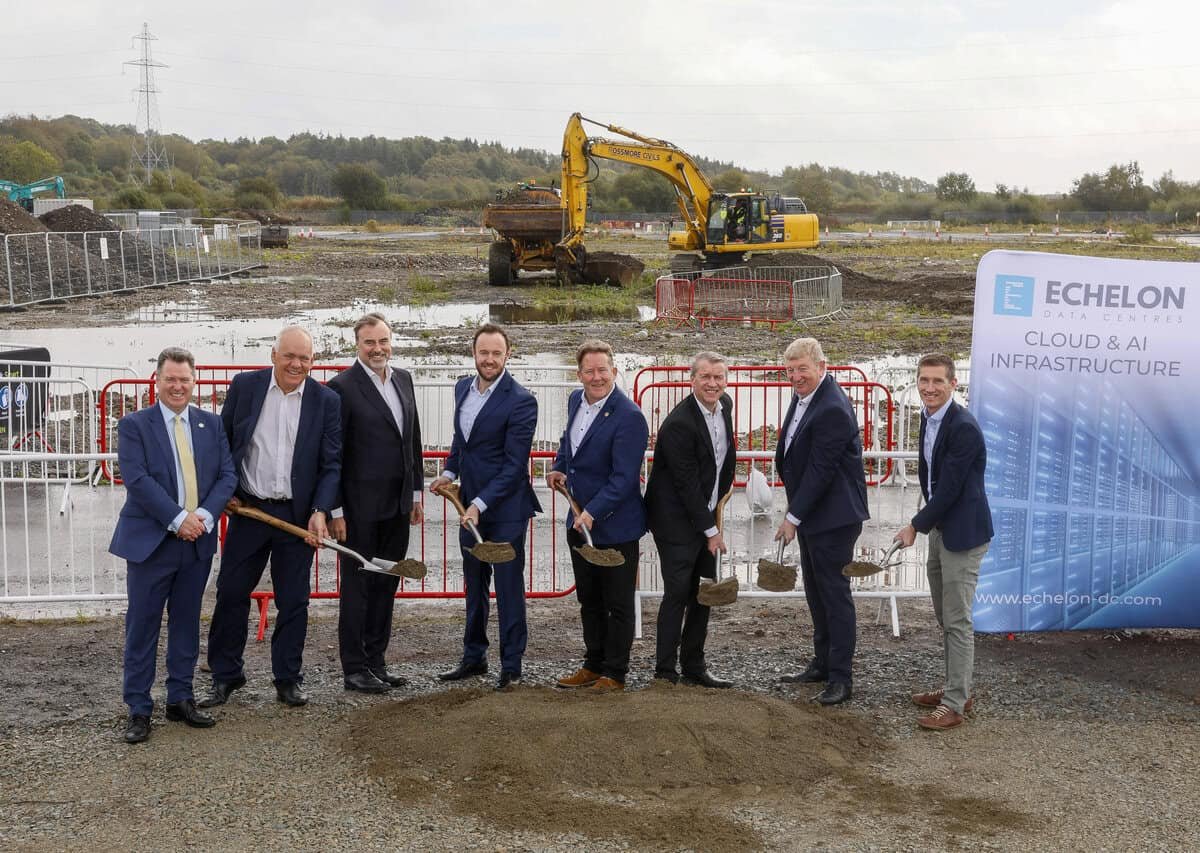
Minister for Climate, Energy and the Environment Darragh O’Brien visited the site on 15th October for a groundbreaking ceremony marking the latest stage of the development.
Construction is already underway on Echelon’s DUB20 campus, with the project expected to be completed in 2028.
The plans centre on supplying the substantial amounts of electricity required by data centres while reducing their reliance on the national grid.
A new 220kV electricity substation is being developed in partnership with SSE Renewables, with plans to connect the campus to the proposed second phase of the Arklow Bank Wind Park.
The offshore wind project, which remains subject to its own planning and development process, would have a generating capacity of approximately 800 megawatts.
Echelon also intends to install solar panels capable of producing more than 6,000 megawatt-hours of electricity each year, alongside battery storage facilities and two energy centres.
The energy centres are intended to provide additional electricity when renewable generation falls short, with one also designed to export power to the national grid.
The Arklow development forms part of Echelon’s wider €4.2 billion investment across two proposed data centre campuses in County Wicklow, known as DUB20 and DUB30.
For local residents, attention will inevitably turn to the employment opportunities associated with the development, both during construction and once the campus becomes operational.
The former fertiliser plant was an important part of Arklow’s industrial history, and the redevelopment of the site marks a substantial change in how the land will be used.
There are still questions surrounding the longer-term impact of the project, particularly the number of permanent jobs it will provide and how its electricity requirements will be managed.
Data centre energy consumption has become a significant issue nationally, and the success of the Arklow project will depend partly on whether its planned renewable energy infrastructure delivers the benefits being promised.
For now, the groundbreaking ceremony marks another step in the redevelopment of one of Arklow’s best-known former industrial sites, with work expected to continue towards the planned 2028 completion date.
Minister Marks New Phase of Arklow Green Energy Park as major development progresses


- Advertisement -
