

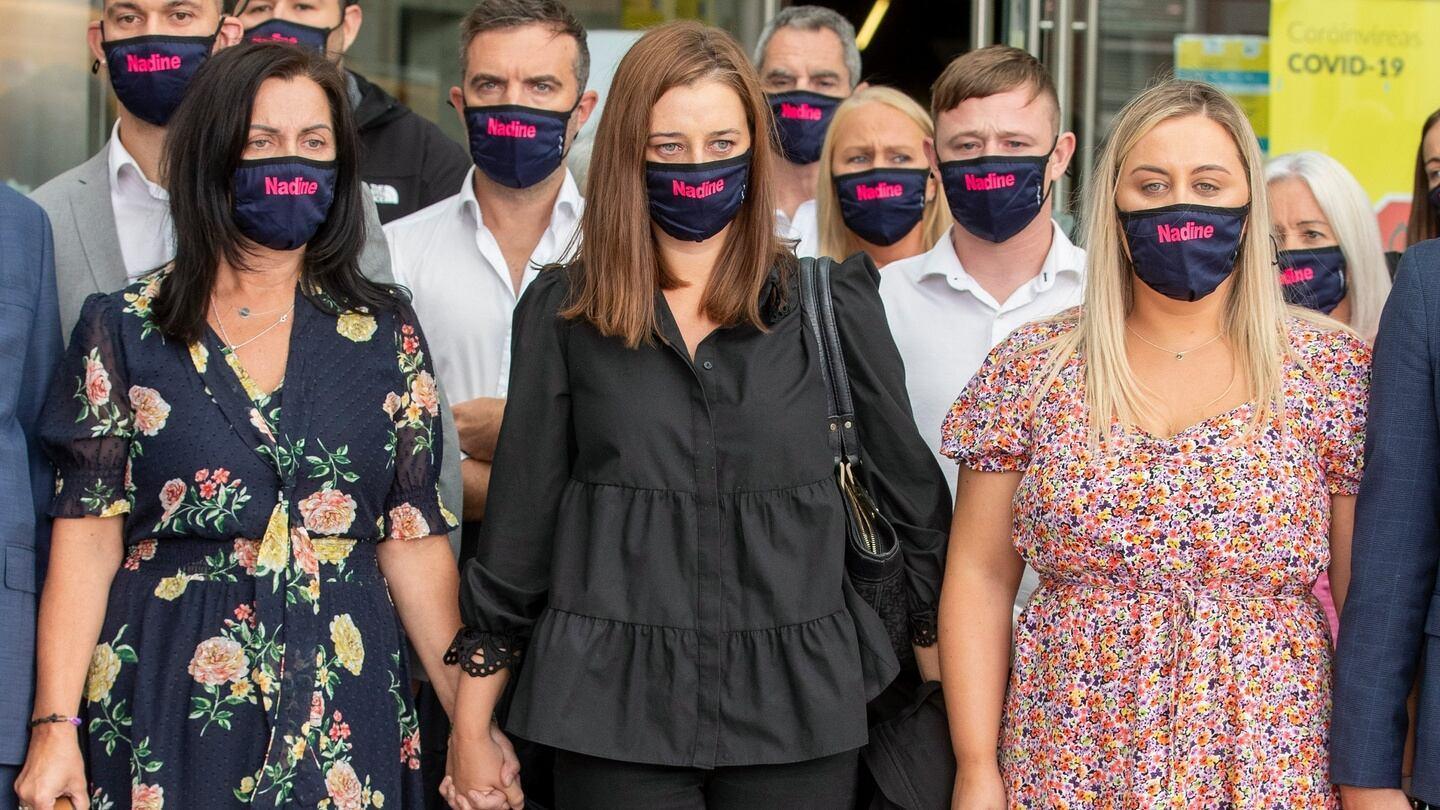
Nadine Lott’s Mother Calls for Greater Education on Healthy Relationships in Irish Schools
The mother of murdered Arklow woman Nadine Lott has renewed her appeal for schools across Ireland to educate young people about controlling behaviour, abusive relationships and violence against women.
Speaking at Leinster House on Wednesday, November 18, Claire Lott emphasised the importance of teaching children to recognise the early warning signs of an unhealthy relationship, before they begin experiencing these situations themselves.
Her appeal comes almost seven years after the death of her daughter Nadine, who was murdered by her former partner, Daniel Murtagh, following an attack at her home in Arklow in December 2019.
Nadine was 30 years old when she died on December 17, leaving behind her six-year-old daughter and a devastated family.
Murtagh was convicted of her murder in August 2021 and subsequently received the mandatory sentence of life imprisonment.
Since her daughter’s death, Claire has continued to advocate for greater awareness of domestic violence, particularly the importance of recognising controlling behaviour before it escalates.
Her latest appeal came during an event organised by Fianna Fáil TD Naoise Ó Cearúil, which brought attention to the role of education in preventing violence against women.
The gathering included calls for the expansion of the White Ribbon Post-Primary School Programme, an initiative developed by the Men’s Development Network to address gender-based violence and promote healthier attitudes towards relationships.
During her address, Claire reflected on behaviours displayed by Nadine’s former partner which, at the time, had not been fully recognised by the family as signs of abuse.
What initially appeared to be difficult or unpleasant behaviour became more troubling when considered collectively and in the context of the violence Nadine subsequently experienced.
Claire questioned how teenagers entering their first relationships were expected to identify controlling behaviour when adults themselves often struggled to recognise its warning signs.
She stressed the importance of helping young people distinguish between genuine affection and attempts to exert control over another person.
Jealousy, constant demands to know a partner’s whereabouts and attempts to restrict their independence should not be mistaken for expressions of love or concern.
However, Claire believes educating young women to identify such behaviour represents only one part of the response.
She also called for greater emphasis on teaching boys and young men about respect, personal boundaries and accepting rejection.
Encouraging young men to challenge misogynistic attitudes or unacceptable behaviour among their friends was another important element of her message.
Rather than placing the responsibility for preventing abuse entirely on potential victims, Claire argued for education which addresses the attitudes and behaviours associated with abusive relationships.
Her comments come amid growing concern about the influence of online material promoting misogyny and hostility towards women, particularly among younger audiences.
Deputy Ó Cearúil also highlighted the importance of engaging boys from an early age and challenging harmful attitudes before they become established.
The White Ribbon Post-Primary School Programme seeks to address these issues through education and training involving teachers, school management and other education professionals.
Developed by the Men’s Development Network, the initiative takes a whole-school approach to preventing gender-based violence, focusing on awareness, intervention strategies and the promotion of respectful relationships.
Participating staff receive training on recognising harmful behaviour and responding appropriately, while schools are encouraged to develop activities which challenge attitudes contributing to violence and discrimination.
The programme has previously worked with several post-primary schools, including schools in County Wicklow, although the latest appeal seeks to extend its reach throughout Ireland.
Its proposed expansion would place greater emphasis on preventing abusive behaviour through education, rather than relying exclusively on interventions after incidents have occurred.
For Arklow, Nadine’s death remains one of the town’s most painful tragedies.
Her murder attracted national attention and prompted wider conversations about domestic violence, coercive control and the difficulties families face in recognising abusive behaviour.
Claire has continued to speak publicly about these issues, drawing on her family’s experience in the hope of preventing similar tragedies.
Her appearance at Leinster House was another opportunity to bring the discussion directly to those involved in shaping education and public policy.
Although extending the White Ribbon programme to every post-primary school remains a proposal, the renewed appeal has placed attention on how young people are taught about healthy relationships and the warning signs of abuse.
For Claire, the message remains deeply personal. Almost seven years after losing her daughter, she continues to campaign for greater awareness, hoping Nadine’s story will encourage young people to recognise harmful behaviour before another relationship turns violent.


