
Arklow Bank Wind Farm Helping Energy Savings
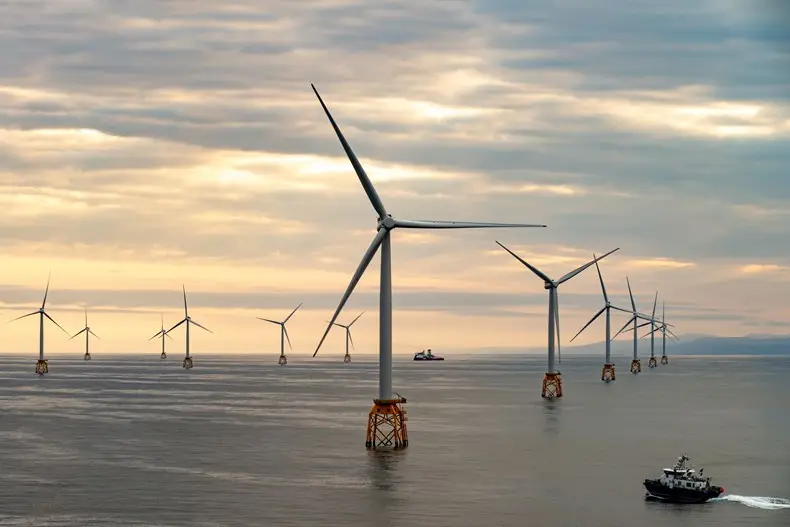
The development of wind and solar farms including Arklow Bank Wind Farm has reduced the cost burden on Irish consumers by €840 million between 2000 and 2023 according to a recent report.
The Arklow Bank Phase 1 Offshore Wind Farm has been operational since 2004 and was a pioneering project that marked a significant step in Ireland’s transition toward a sustainable and self-reliant energy future. As the first and, for many years, the only offshore wind farm in the country, Arklow Bank stands as a testament to the transformative potential of renewable energy for local communities and the nation.
A Local Milestone with National Impact
Situated approximately 10 kilometres off the coast of Arklow, the Arklow Bank Phase 1 wind farm comprises seven turbines with a combined capacity of 25 megawatts (MW). This project was groundbreaking, not only as Ireland’s first offshore wind farm but also as a prototype for the feasibility of large-scale offshore wind energy production in the country.
The farm has demonstrated the ability of offshore wind to deliver clean, affordable energy. Since its inception, it has played a key role in reducing Ireland’s reliance on imported fossil fuels. According to the report “Good for Your Pocket” by Baringa Partners, renewable projects like Arklow Bank have helped displace significant amounts of gas and coal, saving billions of euros and cutting carbon emissions nationwide.
The Economic and Environmental Benefits
The report highlights that renewable energy initiatives, including projects like Arklow Bank, have saved Irish consumers €840 million between 2000 and 2023. By lowering wholesale electricity prices and reducing dependence on volatile international fuel markets, these savings have directly benefited both households and businesses. Moreover, renewables have shielded Irish consumers from the worst effects of global energy crises, such as the recent price surges triggered by the geopolitical turmoil.
Arklow Bank’s contribution goes beyond financial savings. Renewable projects across Ireland, including this offshore site, have avoided the burning of €7.4 billion worth of gas and coal since 2000. For the environment, this equates to over 47 million tonnes of avoided carbon dioxide emissions, significantly contributing to Ireland’s climate goals.
A Beacon for Future Development
The success of Arklow Bank has paved the way for further offshore wind developments along the Irish coast. As Ireland aims to meet its ambitious target of 80% renewable electricity by 2030, offshore wind will play a pivotal role. Plans for expanding the Arklow Bank wind farm into a full-scale project with an additional capacity of over 500 MW are already underway. This expansion promises to bring further benefits to the local economy and energy security.
The Local Perspective: Jobs and Community Engagement
Arklow’s position as a hub for renewable energy has also brought local benefits. The offshore wind farm has generated employment opportunities in the region, particularly in maintenance and marine operations. As future expansions progress, even more jobs are expected to be created, from construction and engineering to long-term operational roles.
The project has also fostered community engagement. By collaborating with local stakeholders, renewable developers have supported educational initiatives and public awareness campaigns, emphasizing the importance of sustainable energy for the future. Residents of Arklow can take pride in their town’s contribution to Ireland’s green transition.
Challenges and the Path Ahead
While the Arklow Bank wind farm has been a success, challenges remain for scaling up Ireland’s offshore wind capacity. The Baringa report underscores the need for significant investment in grid infrastructure to accommodate higher levels of renewable energy. Strengthening Ireland’s electricity grid and ensuring robust market designs will be critical to unlocking the full potential of offshore wind.
Additionally, achieving the 2030 climate targets will require a collaborative approach, involving government, local authorities, and private stakeholders. Addressing logistical challenges, such as permitting and supply chain bottlenecks, will be vital for ensuring that projects like Arklow Bank’s expansion are delivered on time.
A Future Powered by Renewables
As Ireland accelerates its renewable energy transition, the legacy of Arklow Bank Phase 1 stands as an inspiring example of what can be achieved. With the potential for expanded offshore wind capacity and the economic and environmental benefits it promises, Arklow’s role in this journey is more significant than ever.
